5 Driving Range Drills That Actually Improve Your Game
Stop mindlessly hitting balls. These 5 driving range drills with purpose will actually translate to lower scores on the course.
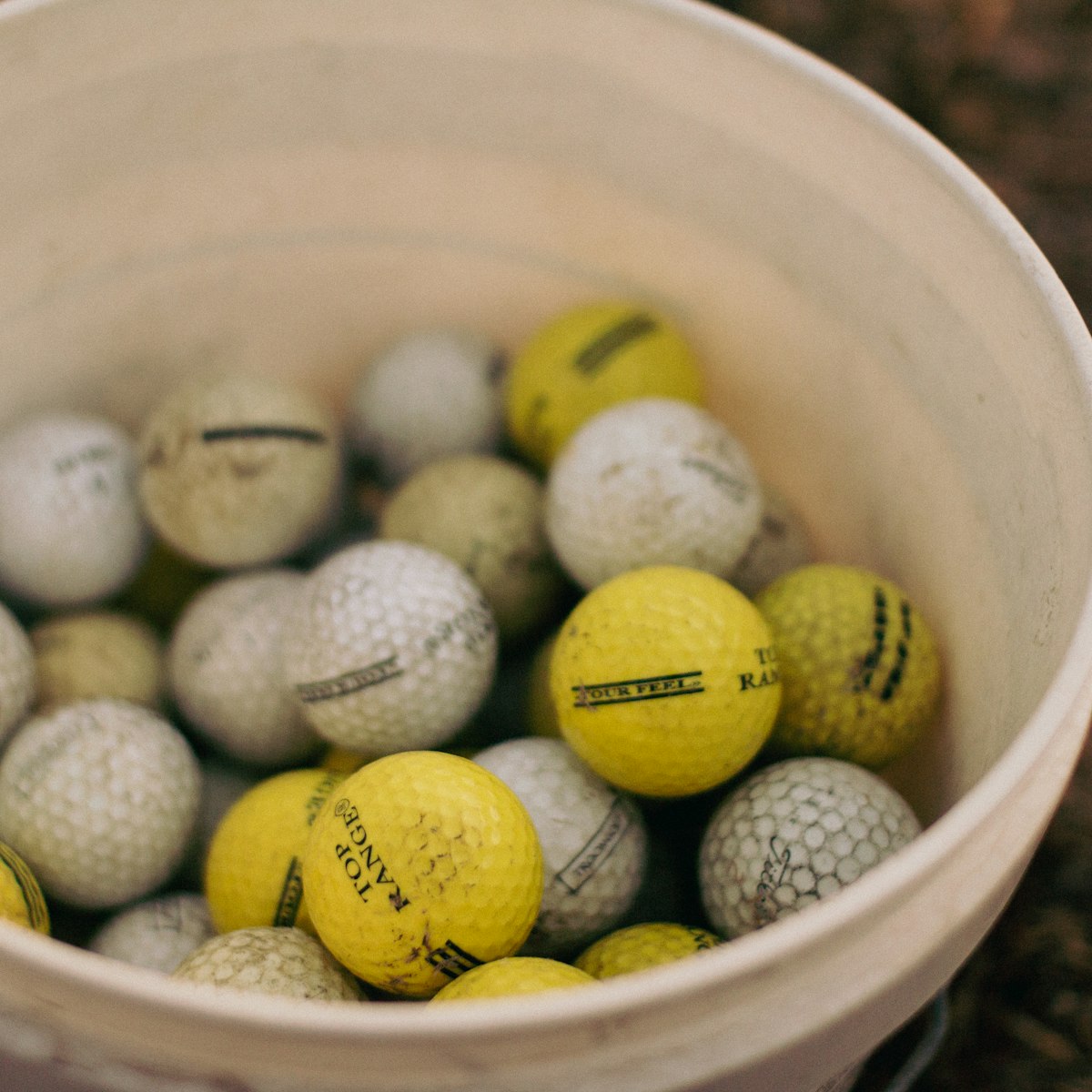
I spent years going to the driving range and accomplishing absolutely nothing. I’d buy a large bucket, set up on the mat, and proceed to hit 120 balls at the 150 flag with my 7-iron while half-watching the guy next to me. Then I’d hit 20 drivers, feel good about the 3 I crushed, conveniently forget the 17 I didn’t, and go home thinking I’d “practiced.”
That’s not practice. That’s just hitting balls. And there’s a massive difference.
It took me way too long to figure out that the range is only useful if you’re doing something specific with a purpose. Mindless repetition doesn’t build skills—it builds consistency in whatever bad habits you already have.
Here are the five drills that actually moved the needle for me. None of them are complicated. All of them are slightly less fun than just grip-it-and-rip-it. And all of them work.
Drill #1: The 9-Shot Drill
What it builds: Shot shaping, clubface control, and adaptability Time needed: 20 minutes Balls used: 27-36
This is the single best drill I’ve ever done. Tiger used to do a version of this, and there’s a reason.
With one club (I use a 7-iron), hit nine different shots:
- Low draw
- Low straight
- Low fade
- Mid draw
- Mid straight
- Mid fade
- High draw
- High straight
- High fade
Hit three balls with each shot shape. That’s 27 balls total.
Here’s the thing—you don’t need to hit perfect versions of each shot. A low draw might just be a slightly lower ball that moves a few yards right to left. That’s fine. The point is learning to manipulate the clubface and your swing to produce different flights.
When I first tried this drill, I could hit maybe 4 of the 9 shots. The low fade was basically the same as my regular shot, and anything “high” was just me scooping at the ball. Six months later, I could produce all nine with reasonable consistency.
Why does this matter on the course? Because golf doesn’t give you the same shot twice. You need to hit a low runner under some branches. You need to cut a 6-iron around a tree. This drill gives you the tools.
Drill #2: Random Club, Random Target
What it builds: Course simulation and mental sharpness Time needed: 15-20 minutes Balls used: 20-30
This one simulates actual golf more than anything else you can do at the range.
Here’s the process:
- Pick a random target on the range
- Estimate the distance
- Select the club you’d hit on the course
- Go through your full pre-shot routine
- Hit one ball
- Pick a completely different target and club for the next shot
No hitting the same club twice in a row. No grooving into one comfortable shot. Just like on the course—every shot is different.
This drill exposed a huge weakness in my game: I was great at hitting 7-irons when I was warmed up and in a rhythm. But ask me to hit a cold 4-iron to a target I just picked? Disaster.
I now spend the last 15-20 minutes of every range session doing this drill. It’s the closest thing to playing golf without actually playing golf.
The key is the pre-shot routine. Take your time. Step behind the ball, pick your line, take a practice swing, then commit. If you’re just rapid-firing balls at different targets, you’re missing the point.
Drill #3: The Ladder Drill (Wedge Distance Control)
What it builds: Precise distance control with your scoring clubs Time needed: 15 minutes Balls used: 20-25
This is the drill that single-handedly lowered my approach shot proximity. It’s dead simple.
Pick your most-used wedge (for me it’s my 52-degree). Hit shots at these distances:
- 50 yards
- 60 yards
- 70 yards
- 80 yards
- 90 yards
Hit 4-5 balls at each distance. The goal isn’t to be perfect—it’s to learn what each distance feels like.
Most golfers know their full swing distances. “My pitching wedge goes 135.” Great. But what about 85 yards? 65 yards? These are the shots you face all the time, and if you don’t practice them, you’re guessing.
After doing this drill twice a week for a month, I developed what I can only describe as a distance catalog in my head. I’d stand over a 73-yard shot and just know the swing—not think about it, feel it. That’s what repetition with purpose does.
Pro tip: use a rangefinder or GPS to verify the distances to range markers. I found out my range’s “100 yard” sign was actually at 112 yards. No wonder my distances were off.
Drill #4: The Worst-Ball Drill
What it builds: Consistency and pressure tolerance Time needed: 15 minutes Balls used: 20
This one is humbling as hell and I love it.
Pick any club and target. Hit two balls. Take the worse of the two results. That’s your score for that “hole.” Repeat 10 times.
For example, if you’re hitting 7-irons at the 150 flag: your first ball lands 10 feet from the flag, your second hooks left into oblivion. Your result for that “hole” is the hook.
This drill forces you to be consistent. It’s not enough to hit one great shot—you need to hit two acceptable ones. It quickly reveals whether your good shots are skill or luck.
When I first started this drill, my “worst ball” results were embarrassing. I’d have one beautiful shot and one complete disaster nearly every time. It forced me to slow down, focus on fundamentals, and build actual repeatability instead of just chasing my best shot.
I also use a variation of this on the putting green: putt two balls from the same spot, and your score is the worse of the two. It’ll change how you think about putting practice forever.
Drill #5: The First-Swing Drill
What it builds: Cold-shot execution and confidence Time needed: 10 minutes Balls used: 10
This is the most overlooked skill in golf: hitting a good shot with no warm-up swings. On the course, you get one shot. You don’t get to hit three and take the best one.
Here’s the drill: step away from the hitting area completely. Walk around for 30 seconds. Think about something else. Then walk up, pick a target, and hit one shot with zero practice swings.
Rate each shot on a 1-5 scale:
- 5: Tour quality
- 4: On the green / in the fairway
- 3: Playable, nothing disastrous
- 2: In trouble but recoverable
- 1: Lost ball / penalty territory
Your goal is to average 3 or better. Sounds easy. It’s not.
This drill taught me something important: my first swing of any club in a round was consistently my worst. Tee shot on #1? Sketchy. First time pulling a 6-iron? Shaky. By drilling first-swing execution, I got comfortable stepping up and trusting my swing without needing to “find it” first.
I alternate clubs each time—driver, 8-iron, pitching wedge, 5-iron, 3-wood. The randomness is the point.
How to Structure Your Range Session
Here’s a template for a one-hour session that actually builds your game:
- Warm-up (10 min): Start with wedges, work up to driver. Easy swings, just getting loose.
- The 9-Shot Drill (20 min): Technical work, building your shot library.
- Ladder Drill (15 min): Wedge distance control—this is where scoring happens.
- Random Club/Target (15 min): Course simulation to finish.
Swap in the Worst-Ball or First-Swing drill occasionally to keep things fresh and challenging.
The Real Secret
The golfers who improve are the ones who practice with intention. I know guys who hit 200 balls three times a week and never get better. And I know guys who hit 50 balls once a week with a plan and steadily drop their handicap.
The range is a tool. Use it like one. Have a plan before you show up, execute the plan, and go home. Save the mindless ball-beating for when you just want to blow off steam—but don’t confuse it with practice.
Your game will thank you. Your wallet will too, since you’ll need fewer buckets.
Weekly Golf Newsletter
Equipment reviews, tips to lower your scores, and exclusive deals delivered every Tuesday.
No spam. Unsubscribe anytime. 100% free.